

This article is the first in the line of a new series brought to you by a new writer on Vision of the Palantir: Carter. He will be taking on quite the challenge every week which will hopefully help others with their deckbuilding approach to certain scenarios. Best of luck to him and to all that follow his series! — Durin’s Father
Over the past year, I’ve been playing more LotR LCG than ever before, and as 2024 came to a close, my friends and I began to brainstorm ways to make the game more fun and immersive. I ended up developing a way to play through all of the game’s scenarios in a pseudo-story mode, where decisions for one quest influence future quests, and every scenario attempt (even losses) affects the overall experience. I am calling this game mode the “ultra-campaign” – a challenging way to experience every quest in the game back-to-back while incorporating existing campaign rules from FFG and adding in additional custom rules to make the experience more immersive, cohesive, and challenging.
I’ll be documenting my solo ultra-campaign journey through weekly blog posts and video playthroughs, hoping to engage with the community and invite others to join this adventure. My goal is simple: complete every scenario in the game under these special rules or see how far I can get before running out of available heroes. If you’re feeling brave (or slightly unhinged) and want to join me on this journey, please do! Who can last the longest in an ultra-campaign playthrough? Is it even possible to beat all quests using these rules? Let’s find out!
Ultra-Campaign Rules
Before jumping into my deckbuilding and playthrough experiences for the first scenario, here are the rules I will be using for my ultra-campaign. I attempted to make things as fun as possible while still maintaining a degree of simplicity, so there are only six rules in total to keep track of. In general, the ultra-campaign is composed of many “mini-campaigns,” each of which is a grouping of specific quests. For example, the first mini-campaign is the Mirkwood Paths campaign, which consists of the five quests from the Core Set and Dark of Mirkwood Expansion. After Mirkwood Paths, the next mini-campaign will be the remaining 6 quests from the Shadows of Mirkwood Cycle. While some of my rules extend throughout the entirety of the ultra-campaign, the start of each mini-campaign also offers a checkpoint where certain rules reset. Without further ado, let’s jump right into the ultra-campaign rules!
- Hero Persistence: While you can rebuild your player deck at any time, your heroes must remain constant between quests, with some exceptions. If a hero is in the discard pile after successfully completing a scenario, they become a Fallen Hero. They are permanently removed for the rest of the ultra-campaign, and you must choose a replacement for the following quest. For each replacement hero that is chosen in this way, you must take a +1 permanent starting threat penalty in future scenarios.
- This rule essentially follows the hero persistence rules from the FFG campaigns, except for the fact that you cannot choose to change heroes in exchange for a higher threat level. My other rules lead to enough hero cycling that I didn’t think this option would be necessary.
- Mini-Campaign Rules: Within each mini-campaign, follow FFG’s standard campaign rules: apply boons and burdens as normal (if FFG has provided a campaign mode for that mini-campaign), and track starting threat penalties for fallen heroes. After completing a mini-campaign, all boons, burdens, and threat penalties are reset.
- I wanted to integrate the campaign rules from FFG’s revised content, but the game would very soon become broken if you had to carry starting threat penalties forward across dozens of quests, for example. Thus, FFG campaign rules are always reset at the beginning of each mini-campaign.
- Progression Style: You may only use player cards and heroes that were available when each quest was originally released.
- This makes the campaign more accessible to new players and encourages creative deckbuilding with a limited card pool.
- Exhaustion: After each victory, randomly select 1 hero (without permanents) and 5 player cards from your deck that become “exhausted.” These cards cannot be used for the remainder of the current mini-campaign. Exhausted cards become available again at the start of the next mini-campaign.
- Now we’re getting into some of my added rules to make things even more interesting. This exhaustion rule is intended to keep the players on their toes with deckbuilding throughout each cycle – you can’t just always rely on your best cards! Instead, you will be forced to be creative and adaptable with your deckbuilding.
- Failure Consequences: For every 5 losses, randomly select one hero you control (without permanents) to become a Fallen Hero. This hero can no longer be used in the ultra-campaign and you must choose a replacement. These Fallen Heroes do not contribute to starting threat penalties.
- This is where things get interesting. I wanted to make sure even losses mean something. Ever play a quest 10 times in a row before finally winning? Well, that should influence the narrative in a story mode. In the ultra-campaign, that would be two dead heroes right there. This incentivizes the player to build decks tuned to the specific quest, in an attempt to minimize losses. I anticipate this to get progressively harder and harder for myself, as I am most familiar with quests earlier in the game. Once I get through the first few mini-campaigns, I expect to be more surprised by the encounter decks, and it may take me a few attempts to tune effective player decks.
- Hero Revival: Track Victory Points across all successful scenarios. At any point, you can trade in 10 VPs to bring back a single dead hero of your choice.
- This is the light at the end of the tunnel. I expect to start losing many heroes due to losses to difficult quests, so an opportunity to revive dead heroes seemed necessary. But you have to earn it first!
So there you have it – my attempt to create the ultimate LotR LCG challenge, combining deckbuilding challenges and meaningful consequences for both victory and defeat. The goal is straightforward: beat as many quests as I can before running out of available heroes. Let’s jump right into the first playthrough!
Passage Through Mirkwood: Deckbuilding
My ultra-campaign begins where every LotR LCG player’s journey starts: Passage through Mirkwood. More specifically, we’re tackling the Mirkwood Paths mini-campaign, which consists of 5 quests: the three core set scenarios plus two quests from the Dark of Mirkwood expansion. I have to admit, I’m nervous even for this first mini-campaign. While I am very familiar with these quests and their respective encounter decks, playing this game as a true solo player can be punishing, and I fully expect to rack up some losses (especially with the infamous Escape from Dol Guldur quest).
Heroes
As a reminder, following our progression mode rules, my first deck is limited to player cards from the core set. For my first set of heroes, I decided to choose Denethor, Eowyn, and Aragorn.


Playing a tri-sphere deck will definitely make resource generation difficult, but these three heroes offer some of the strongest abilities of the core set, and I want to make sure to have access to multiple spheres of player cards.
- Denethor: encounter deck scrying is extremely powerful in solo play, and Denethor’s ability will be crucial for avoiding nasty surprises.
- Eowyn: she’s essential for early-game questing power. Her ability to discard a card for +1 willpower also offers extra flexibility.
- Aragorn: he is a very versatile hero in the early game. His ability to spend a resource to ready after questions means he can contribute to multiple phases each round.
Player Cards
When constructing decks, I try to follow a couple key principles:
- Aim for no more than 50 cards. Anything more and your deck is likely too unfocused, and you will be drawing cards that don’t contribute much to your main strategy.
- Include multiple copies or no copies of a given card in your deck. Now, there will, of course, be exceptions to this rule, and my deck has already broken this rule, but the overall idea is to reduce the variance of your deck so you end up drawing your best cards.
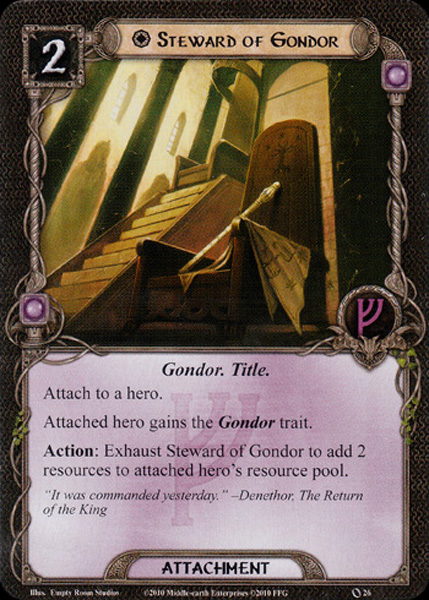
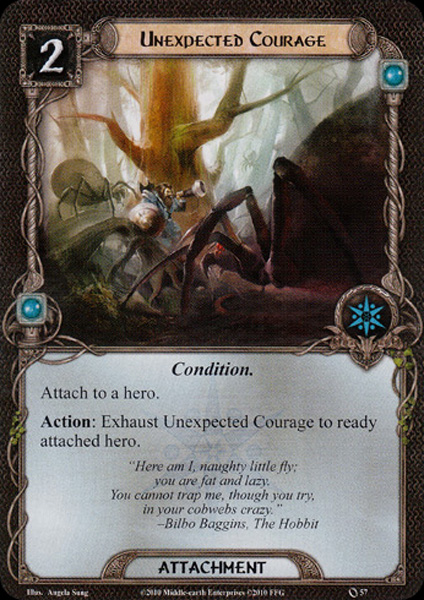
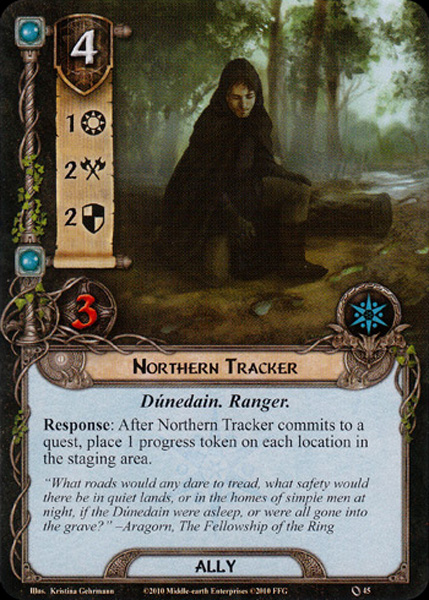
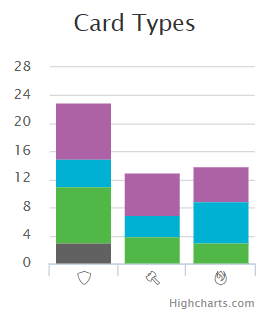
Given our limited card pool, several cards were automatically 3x auto-includes. Gandalf and Sneak Attack offer one of the best early-game combos. Snowbourn Scout gives you an extremely cheap ally for chump defense. Steward of Gondor, Unexpected Courage, and A Test of Will allow for resource generation, hero readying, and when revealed cancellation, all of which are important for taking control of a scenario. Other cards, while great, only ended up getting two copies in my deck. Faramir and Northern Tracker allow for great questing and location control, respectively, but they also cost four resources, making them difficult to play in the early game. Gleowine and Henamarth Riversong have strong card draw and encounter scrying abilities, but their uniqueness only allows one copy in play at any given time. The rest of the deck rounds out with some cheap allies, healing effects, and shadow cancellation.



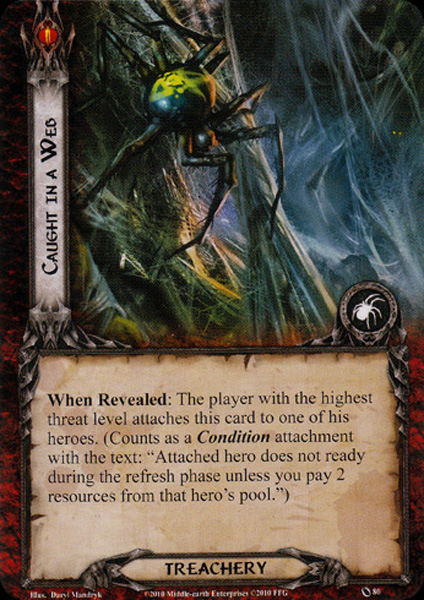
Passage through Mirkwood does not require much scenario-specific construction, except for the Caught in a Web treachery card. This card, which acts as a condition attachment, means that three copies of Miner of the Iron Hills are necessary for my deck.

You can find my complete deck list here: https://ringsdb.com/deck/view/566002


Passage Through Mirkwood: Playthrough
Number of attempts to beat scenario: 1
Attempt Log
Attempt 1: SUCCESS
- This successful attempt really shows the power of encounter deck scrying. I was able to know exactly what card was coming every turn, which allowed me to always quest just as much as I needed to.
- Additionally, this attempt served as a good reminder that you do not need to optionally engage high-threat enemies if you can quest past them! I ended up leaving the Dol Guldur Beastmaster in the staging area for the entirety of the scenario. This is an especially useful tactic in solo play, where your combat power is often low.
- I was also able to showcase some of the very strong core set cards in this attempt. Steward of Gondor and Celebrian’s Stone made Aragorn a great resource generator and quester. Also, the Sneak Attack/Gandalf combo allowed me to easily take out Ungoliant’s Spawn to end the scenario!
- Overall Score: 84 (5 rounds, 34 ending threat, 0 VPs, 0 damage on heroes, and 0 total threat of dead heroes)
Campaign Notes
Ultra-campaign Tracker
I completed the scenario on my first attempt, no heroes died, and I earned zero Victory Points, so many of the ultra-campaign rules have not come into play yet.
- 0 Fallen Heroes
- 0 VP
- 0 losses
Mini Campaign Tracker (Mirkwood Paths)
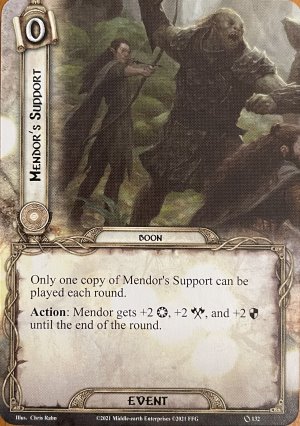
As per the FFG Mirkwood Paths campaign rules, I added 1 copy of the Mendor’s Support boon card to my deck. As a side note, boon cards will not be susceptible to the exhaustion rule of my ultra-campaign. Additionally, quest card 3B was “Don’t Leave the Path!” so 1 copy of the Lingering Venom burden card is added to the future encounter decks.

Now comes the real challenge: the rule of exhaustion. After successfully defeating a scenario, one hero and 5 player cards become “exhausted” for the rest of the mini-campaign. Let’s see what I got:
- Hero: Denethor
- Player cards
- 1x Henamarth Riversong
- 1x Gleowine
- 1x Steward of Gondor
- 1x Self Preservation
- 1x A Test of Will
Unfortunately, Denethor will not be able to join the next quest, which means that things are going to get much more out of control without encounter deck scrying. As for the player cards, Steward of Gondor and A Test of Will were unfortunate choices; now, I will only be able to put two copies of each of these cards in my deck. The other three chosen cards do not matter as much since I was not putting three copies of any of them in my deck anyways.
So far, this has been a ton of fun, but things are now getting more interesting as more of my campaign rules begin to kick in. Next week, I will be attempting Journey Along the Anduin with a replacement for Denethor and a brand new solo deck. See you then!
If anyone is interested in seeing a multiplayer attempt of the ultra-campaign, let me know! LotR LCG game plays very differently in multiplayer, and it would be interesting to try different iterations of this game mode. I may even have someone in mind to play with 😉 — Carter
 Vision Of The Palantir
Great article, I’ll begging my journey with this game this year and this is very informative.
LikeLiked by 1 person
I’ve been away from the game for a while and your ultra-campaign got me to start from the beginning. I probably won’t be playing your campaign rules strictly, but I will be playing progression style.
It took me three shots to beat passage, god I cant wait for Escape as 1P again… 😦
Thanks for for efforts!
LikeLike
So great to hear you’re getting back into the game, enjoy! 😉
LikeLike